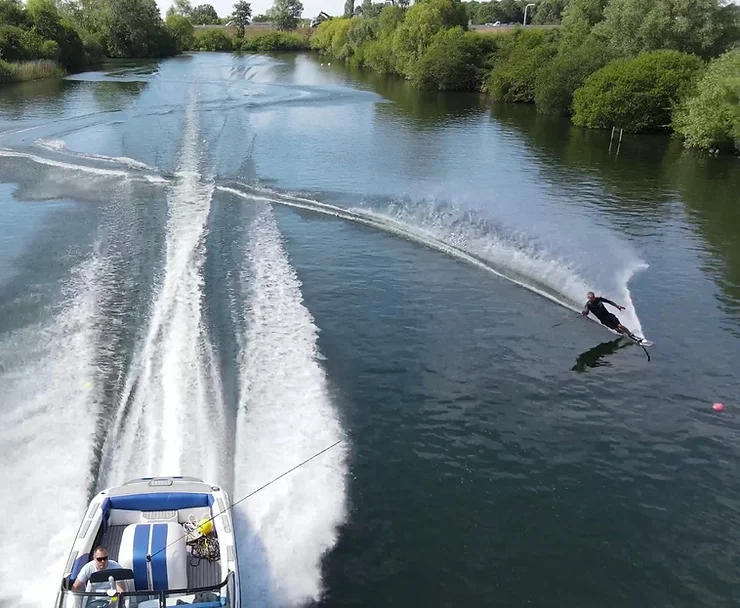
Slalom waterskiing is one of the most technically demanding and rewarding water sports available in the UK.
At Longside Lake, a stunning location close to London, skiers of all ages and ability levels come together each year to learn, improve and enjoy time on the water during the summer season and beyond.
Longside Lake is perfect for both beginners and groups and is known for its quick skill development opportunities. The lake also offers a variety of watersports, including sailing.
Whether this is your first time behind a boat or you are a more experienced skier aiming to refine your technique, success in slalom waterskiing depends on mastering two fundamental elements: body position and line control. Lots of skiers come to Longside Lake seeking effective training methods to improve their skills. These principles influence everything from balance and speed to how efficiently you move across the wake and through the course.
This post explores how correct positioning, better connection to the handle and improved awareness of load and timing can help skiers progress sooner, ski more confidently and enjoy every run on the lake.
Introduction to Slalom Waterskiing
Slalom waterskiing is an exhilarating water sport that combines speed, skill and precision in a way that’s both challenging and deeply rewarding. Unlike snow skiing, where you control your own pace and path down the mountain, slalom waterskiing requires you to work in harmony with the boat, maintaining a strong connection to the rope as you carve your way through a series of buoys on the lake. The key to a successful ride lies in adopting a stacked position, keeping your hips forward and your body balanced over the ski. This alignment enables skiers to respond quickly to changes in direction and maintain control at high speeds. For those just starting, it’s wise to begin with shorter lines and focus on building confidence and technique before progressing to longer, more challenging courses. With each session, you’ll improve your connection to the water, refine your body position and achieve smoother, more controlled runs. Whether you’re aiming to master the basics or push your limits, slalom waterskiing offers endless opportunities to start your journey, improve your skills and enjoy the thrill of the sport on the lake.
Why Body Position Matters More Than Strength
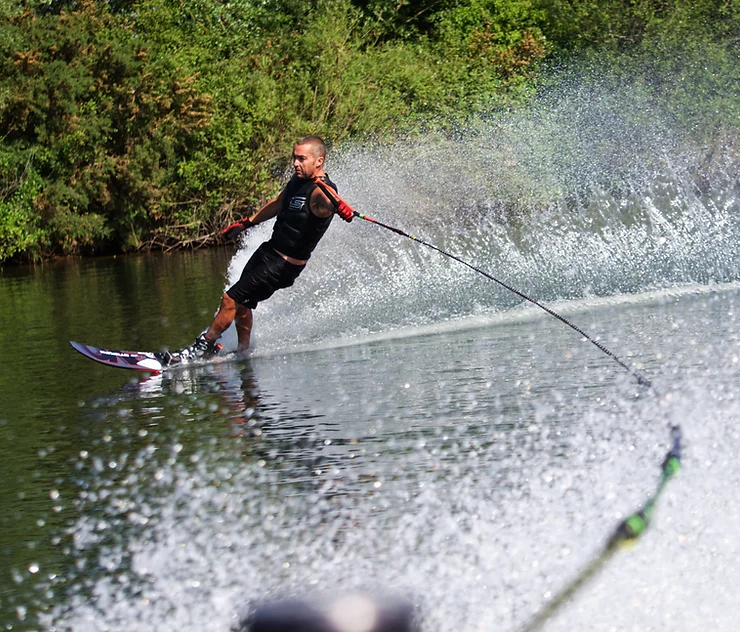
One of the most common misconceptions among skiers is that slalom waterskiing is about pulling harder or being stronger. In reality, correct body position allows the skier to work with the boat rather than against it.
Poor body position often leads to excessive arm fatigue, inconsistent turns and loss of direction. In contrast, a strong, efficient stance enables skiers to maintain control with less effort and more consistency.
At Longside Lake, coaches focus on teaching a stacked position, where the body is aligned to handle the pull of the boat efficiently.
What Is a Stacked Position?
A stacked position means:
-
Shoulders aligned over hips
-
Hips positioned forward, not sitting back
-
Weight balanced through the feet and ski
-
Core engaged to manage load
-
Arms relaxed while maintaining a strong connection to the handle
This position allows the skier to resist the pull of the boat without excessive strain. It also improves balance, particularly when crossing the wake or changing edge.
Hips Forward: The Key to Control and Stability
Keeping the hips forward is one of the most important yet challenging aspects of slalom waterskiing. When the hips drop behind the feet, skiers tend to lose balance, increase load on the arms and struggle to maintain speed and direction.
Hips forward enables:
-
Better connection to the handle
-
More stable edge control
-
Cleaner turns
-
Reduced slack in the rope
Developing this position takes time and repetition, but once gained, it significantly improves performance at every level.
Understanding Line Control and Connection
Line control refers to how effectively a skier manages the rope, handle and connection to the boat throughout a run. This includes how tension is created, maintained and released during turns and wake crossings.
Good line control allows skiers to:
-
Maintain consistent boat speed
-
Avoid sudden jerks or slack
-
Stay balanced through transitions
-
Ski with better rhythm and flow
When line control breaks down, skiers often over-pull, rush turns or lose connection entirely. At Longside Lake, coaching emphasises patience, timing and awareness rather than force.
Boat Characteristics
The boat is a central element in slalom waterskiing, shaping every aspect of your experience on the water. A well-chosen boat should deliver consistent speed, typically between 30 and 36 mph, ensuring that skiers can maintain rhythm and control throughout the course. The boat’s weight and size influence how it sits in the water, affecting the wake and the skier’s ability to hold a clean edge. Directional stability is equally important, as precise steering helps skiers anticipate turns and maintain their line through each buoy. When selecting a boat, consider its horsepower, the type of propeller and the transmission, as these factors all contribute to smooth acceleration and reliable performance. A skilled driver who understands the nuances of the course and the needs of the skier can make a significant difference, helping you get up on the ski quickly and maintain the ideal speed and direction. Ultimately, the right boat enhances your connection to the water, supports your technique and makes every run on the course more enjoyable.
The Role of Boat Speed and Timing
Boat speed plays a crucial role in how body position and line control interact. Too much speed too early can overwhelm developing skiers, while inconsistent speed makes it difficult to establish rhythm.
Learning to match body movement to boat speed allows skiers to:
-
Stay connected without excessive pulling
-
Enter turns earlier and more calmly
-
Maintain better edge control
-
Achieve smoother, more controlled runs
This is especially important for skiers learning the course, where timing and patience matter as much as strength or confidence.
The Two-Hands-On Handle Drill
One of the most effective drills used at Longside Lake is skiing with both hands on the handle for extended periods, whether free skiing or practising within the course.
This drill is often underestimated but delivers powerful results.
Benefits of the Two-Hands-On Drill
-
Encourages correct body position
-
Improves awareness of load and rope tension
-
Helps skiers feel connection through the core rather than the arms
-
Provides immediate feedback when posture breaks down
By keeping both hands on the handle, skiers reduce unnecessary movement and focus on alignment, balance and direction. This drill is suitable for beginners, intermediate skiers and advanced athletes alike.
Edge Control, Wake Crossings and Turns
Edge control is central to slalom waterskiing. It determines how effectively a skier moves across the wake, controls speed and sets up for the next turn. When edging to the left, creating pressure against the bottom of the ski is crucial for accelerating the turn and handling the centrifugal load. Centrifugal force plays a significant role in slalom skiing, especially when turning around the pylon. Traveling in an arc around the pylon creates a centrifugal force that affects the skier's position and control. Maintaining a strong upper body position against the line is necessary to handle high centrifugal forces while skiing.
Key concepts include:
-
Gradual edge engagement rather than aggressive pulling
-
Maintaining stacked position through the wake
-
Staying calm and patient at the end of each turn
-
Avoiding late or rushed movements
Clean wake crossings depend on balance, posture and confidence in the ski. At Longside Lake, skiers are encouraged to focus on quality of movement rather than how hard they pull.
Managing Load Without Over-Pulling
Load is the force generated between the skier and the boat. While some load is necessary to maintain speed and direction, too much load, especially through the arms, leads to fatigue and loss of control.
Effective skiers learn to:
-
Let the ski and body position create load naturally
-
Avoid pulling with the arms
-
Maintain connection through the hips and core
-
Release load smoothly into turns
This approach allows skiers to ski longer, more relaxed runs while maintaining consistency across multiple passes.
Course Strategy and Planning
Success in slalom waterskiing isn’t just about physical ability, it’s also about smart strategy and careful planning. Before you hit the water, take time to study the course: know where each buoy is placed, the direction of every turn,and how the speed and load will change as you progress. Pay attention to water conditions, wind direction and even the position of the sun, as these elements can all impact your visibility and performance. By developing a clear plan, skiers can optimize their approach, conserve energy and make adjustments on the fly to achieve their goals. Whether you’re aiming for a personal best or simply looking to improve your technique, having a solid course strategy enables you to enjoy the sport more fully and make the most of every session. With thoughtful preparation, you’ll find yourself moving through the course with greater confidence, efficiency and enjoyment.
Mental Preparation and Focus
The mental side of slalom waterskiing is just as important as physical skill. To perform at your best, you need to cultivate focus, resilience and a genuine passion for the sport. Skiers who approach each run with a positive mindset and clear goals are better equipped to stay on edge, react quickly to changes in the course and overcome any challenges that arise. Mental preparation involves setting realistic expectations, managing nerves and staying calm under pressure, skills that not only improve your performance but also help you enjoy the ride. By developing strong mental habits, you’ll build confidence, stay motivated and achieve your goals on the water. Remember, every great skier started as a beginner and with the right focus and determination, you can continue to improve and share in the excitement and community that make slalom waterskiing so special.
Free Skiing vs Course Skiing
Both free skiing and course skiing play an important role in development.
Free skiing allows skiers to focus on body position, handle control and confidence without the pressure of timing gates and buoys. It is ideal for beginners, those returning to the sport, or skiers working on specific technical changes.
Course skiing adds structure, discipline and precision, helping skiers develop timing, accuracy and consistency. Longside Lake provides the opportunity to progress at a pace suited to each individual.
Equipment and Gear
Choosing the right equipment and gear is essential for maximizing your performance and enjoyment in slalom waterskiing. Start with a high-quality ski that matches your ability and style, ensuring it provides the right balance of stability and responsiveness on the water. A comfortable, supportive life jacket is a must for safety, while well-fitted ski boots help you maintain a strong connection to the ski. Don’t overlook the importance of gloves for grip and protection and consider a wetsuit or dry suit to stay comfortable in varying water temperatures. The rope and handle are critical components, look for options that offer durability and a secure grip, as these directly affect your control and connection during each run. By investing in the right gear, skiers can improve their technique, reduce the risk of injury and enjoy every moment on the lake. Whether you’re gearing up for your first post or looking to upgrade your setup, the right equipment makes all the difference in achieving your watersports goals.
Supporting Progress Off the Water
Improving slalom waterskiing is not limited to time on the lake. Many skiers benefit from off-water preparation, including gym work focused on strength, mobility and balance.
Useful areas to train include:
-
Core stability
-
Hip mobility
-
Leg strength and balance
-
Shoulder endurance
This off-water work supports better posture, reduces injury risk and enables skiers to maintain strong positions for longer periods.
Watersports at Longside Lake, London, UK
Longside Lake is a well-established watersports destination serving London and the wider UK. Alongside slalom waterskiing, the lake offers a variety of water sports in a safe, welcoming environment.
The lake is used by individuals, families, schools and clubs, creating a strong community atmosphere where skiers can learn, share experiences and support one another.
The combination of expert coaching, high-quality facilities and a stunning natural setting makes Longside Lake a special place to enjoy time on the water.
Learning Through Feedback and Experience
Progress in slalom waterskiing comes from consistent practice and clear feedback. At Longside Lake, skiers are encouraged to listen to coaching advice, reflect on each run and focus on small, achievable changes.
By concentrating on fundamentals such as:
-
Body position
-
Handle control
-
Timing and patience
-
Direction and edge awareness
skiers often see improvements sooner than expected.
A Community for All Ages and Levels
Slalom waterskiing at Longside Lake is open to a wide range of ages and abilities. Whether you are new to the sport, returning after a break, or aiming to improve your personal best, there is an opportunity to learn and progress.
The supportive community, experienced coaches and structured sessions help skiers feel confident and motivated throughout the season.
Start Your Slalom Waterskiing Journey at Longside Lake
Mastering body position and line control is the foundation of enjoyable, efficient slalom waterskiing. By focusing on alignment, connection and timing, rather than force, skiers can improve more quickly and stay relaxed behind the boat. Many of the techniques described here are used by pro skiers to master connection and swing around the pylon. Mastering reach, maintaining connection and position against the rope, is key to swinging around the pylon effectively.
Longside Lake offers a unique opportunity to learn, train and enjoy waterskiing in a beautiful UK setting close to London. Whether your goal is to ski for fun, improve technique or work toward higher performance, Longside Lake provides the environment, coaching and support to help you achieve it.
To learn more or book a session, visit the CJM website and sign up online to take the next step in your waterskiing journey.